

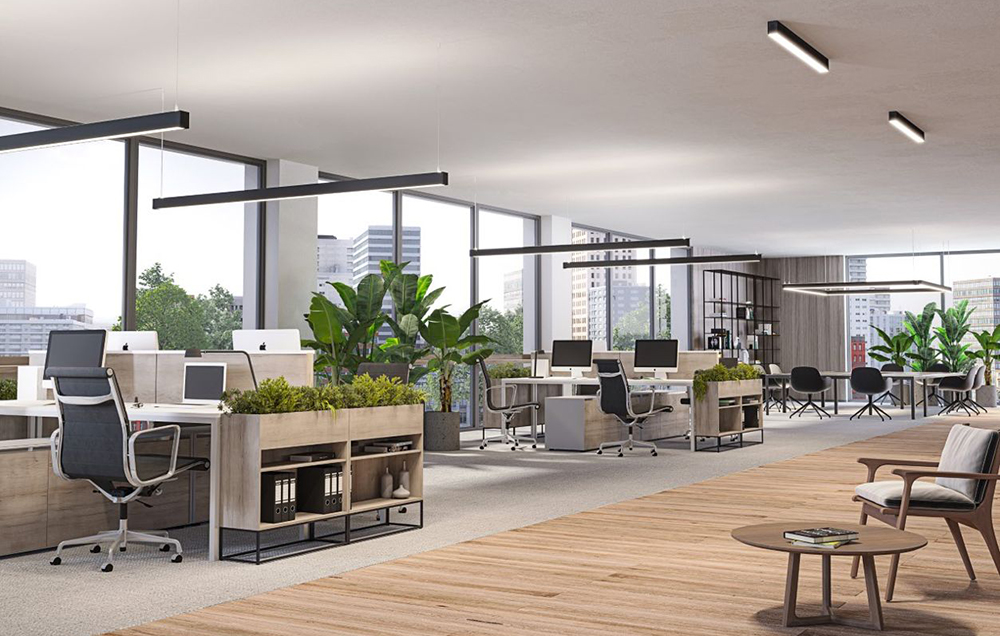
What are Office Lighting Regulations?
Lighting is not only important as a design feature but it’s also considered to be a contributor to competent health and safety in the workplace. It works on a very simple premise: the quicker and easier it is to see a hazard, the more easily it is avoided.
The hazards and features present in an office will directly determine the lighting requirements for safe operation. In addition, the type of work being carried out affects the recommended lighting levels; the more intricate the task, the better the lighting should be to avoid accidents and prevent health issues affected by lighting.
Therefore, office lighting regulations are the standards by which the capability of lighting is measured to reduce injuries and increase employee productivity and well-being.
At the current time, there are no statutory workplace lighting levels in the United Kingdom that directly address workplace lighting. Yet, several legislations relate to the use of lighting at work, and the HSE sets out minimum recommended levels and good practices in their publication guide “Lighting at work” (HSG38). The HSE also make use of the technical lighting recommendations from the CIBSE (Chartered Institution of Building Services Engineers).
As covered in the Workplace (Health, Safety and Welfare) Regulations 1992: Section 8 every workplace shall have suitable and sufficient lighting. ‘Suitable and sufficient’ is a variable that will entirely depend on the layout and features of a workplace and should, therefore, be evaluated at the design stage to provide lighting of this standard.
As for who’s responsible for lighting regulations? Employers, the self-employed and people in control of non-domestic premises. They all have a duty to ensure that lighting is safe and does not pose a health risk to employees and others who may use their premises in line with the Management of Health and Safety at Work Regulations 1999 act.
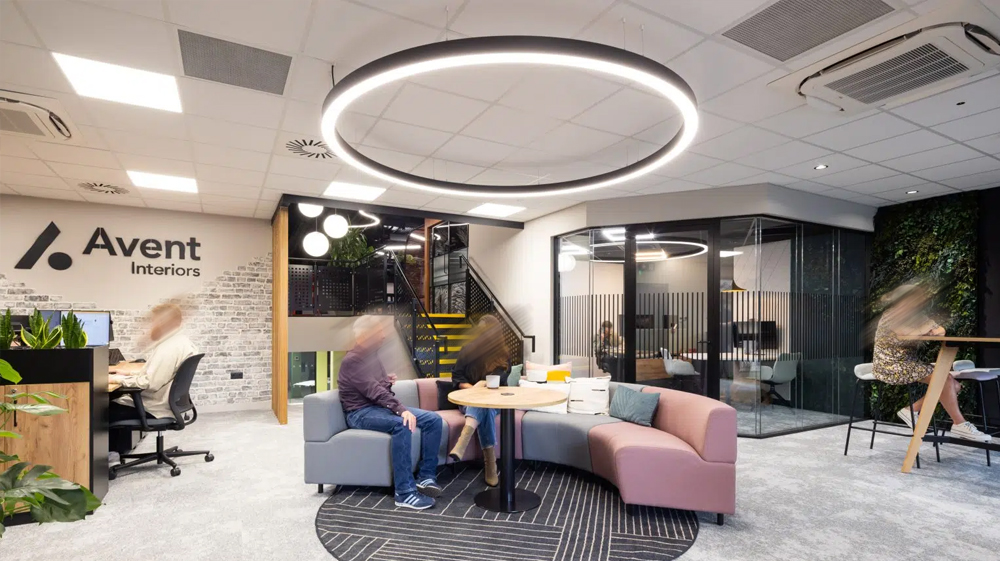
Why Is Good Lighting In The Workplace Important?
HSG 38, otherwise known as the HSE’s Lighting At Work handbook, determines that the lighting is a matter of judgement – but given the above list, there’s a lot to base a judgement on.
Work environments should be illuminated whenever necessary to allow sufficient sight. For desk areas and reception areas where screens are frequent, lighting should never be so harsh as to cause glare.
Glare can have a significant effect on the welfare, efficiency and health of staff. As there are a number of factors that contribute to lighting glare, office designers calculate what is called the Unified Glare Rating (UGR). The recommended UGR rating varies depending on the workplace zone; general office lighting should be <UGR19 whilst warehouses, gyms etc can have a higher maximum. Mount Lighting products that are recommended for low glare include:
- FIREFLY Ultra-Slim Direct & Indirect Linear Light
- LUZ Surface & Recessed Linear Light
- SLIM Surface & Recessed Liear Light
- HAO Direct & Indirect Linear Light

How Does Poor Lighting Affect A Business?
When it comes to choosing your office lighting design, it is important to recognise what makes office lighting bad and what makes it exceptional. Bad lighting can have adverse effects from the very offset. This could be due to a number of things whether it’s creating a poor impression with clients or having to deal with the repercussions of being seen to health and safety standards.
Bad lighting is directly associated with ill-health effects ranging from eye strain, headaches and fatigue to postural problems and musculoskeletal disorders (MSDs).
These ailments can have a direct knock-on effect on the mental and physical health of workers and can lead to time off work, absenteeism and reduced productivity. In turn, these issues can cause workflow and productivity to slow down which can lead to drops in profit and bad retention of staff and clients.
What to consider for suitable and sufficient office lighting
Whether you’re creating General, Local or Localised lighting, you have to consider whether your lighting design is truly suitable and sufficient. Suitable and sufficient will mean that you have no detrimental patches of low light, that all hazards are highlighted and that employees and visitors are being subjected to lighting at an appropriate level as to not cause squinting or glare.
One example of suitable and sufficient lighting awareness is illuminating machinery or a protrusion from above. Lighting from below can lead to confusing shadows and reduced vision that could cause an accident.
CONTACT US
Email: support@bvinspiration.com
Phone: +86-28-81480011 +86 173 0198 4071
Address: No. 1 TianQin St., Wusha Industrial Zone, Henglan Town, ZhongShan, Guangdong, China
Post time: Apr-09-2026


